Explore our elite tier of biomechanically validated fixation platforms optimized for rotator cuff repair, ACL reconstruction, spine stabilization, and orthopedic osteosynthesis.
An authoritative analysis of metallurgical integrity, regulatory convergence, and supply chain scalability driving global reconstructive surgery.
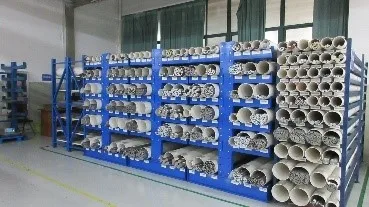
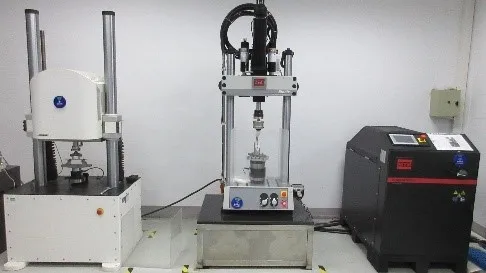
Modern clinical pathways in soft tissue repair demand absolute biocompatibility and flawless biomechanical performance. As a prominent domestic supplier, we have instituted a comprehensive raw material verification architecture. Every titanium batch (including Ti-6Al-4V ELI conforming to ASTM F136) is subjected to rigorous spectroscopy, metallographic evaluation, and mechanical testing to ascertain its yield strength, fatigue endurance limits, and elastic modulus profile.
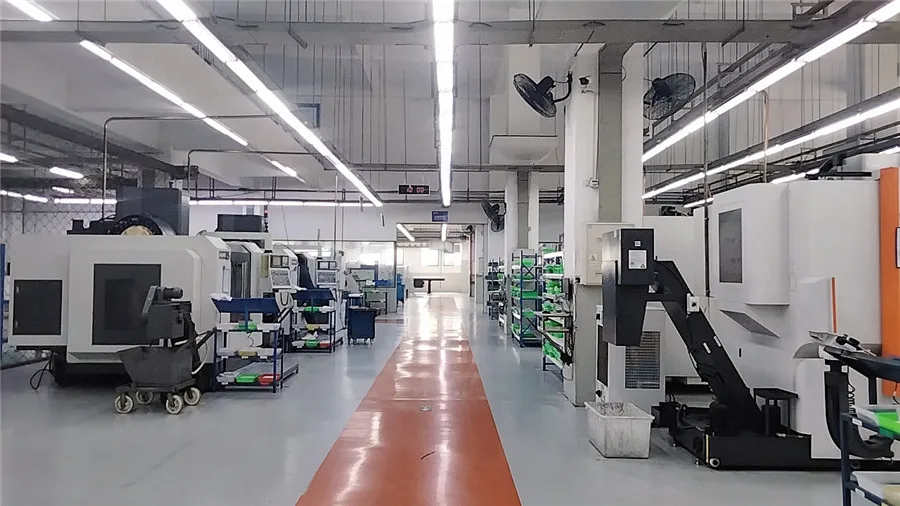
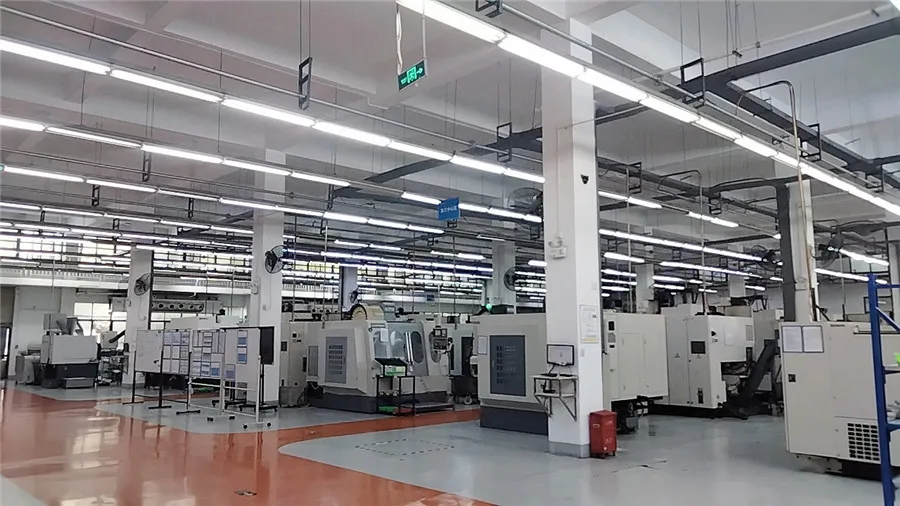
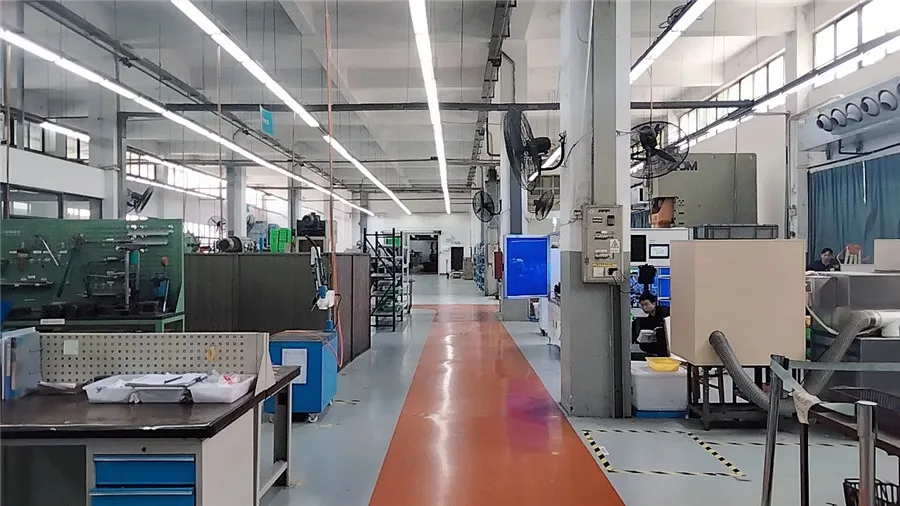
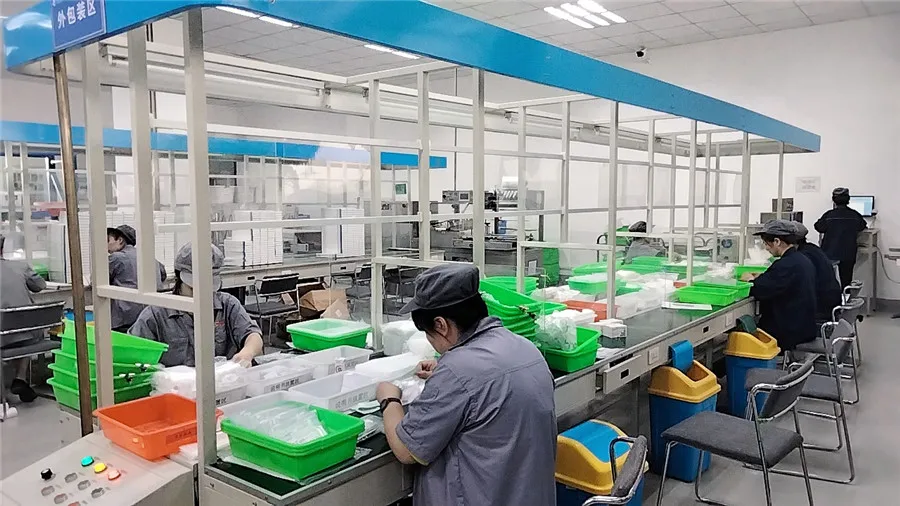
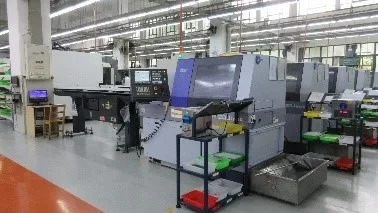
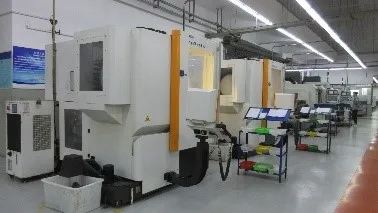
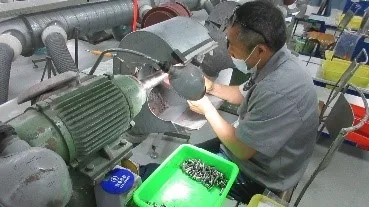
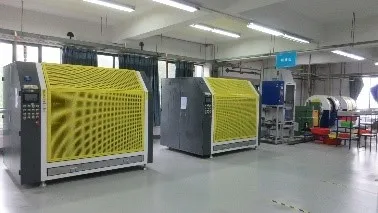
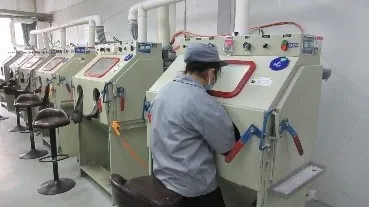
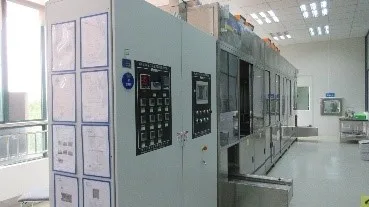
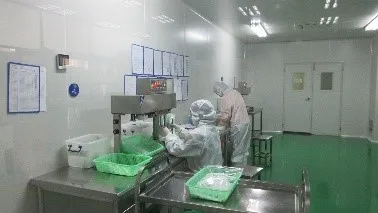
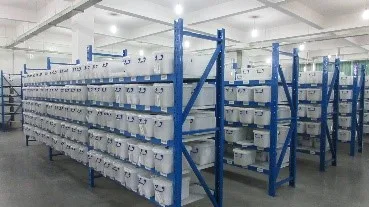
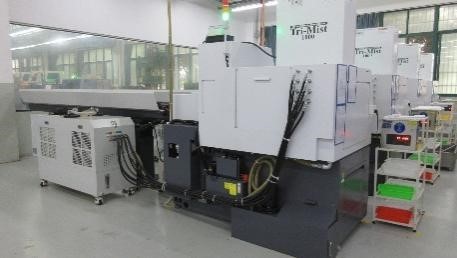
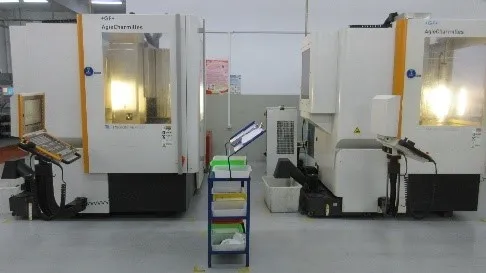
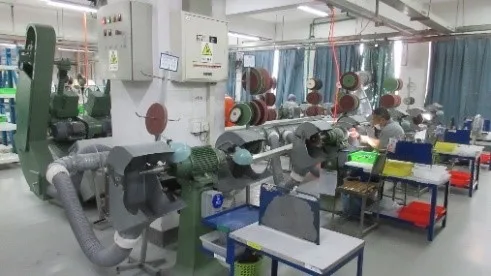
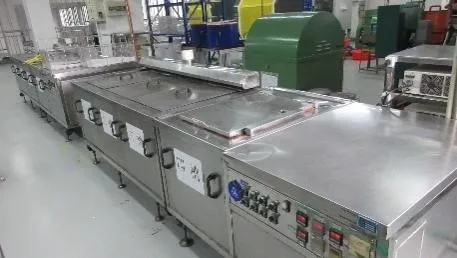
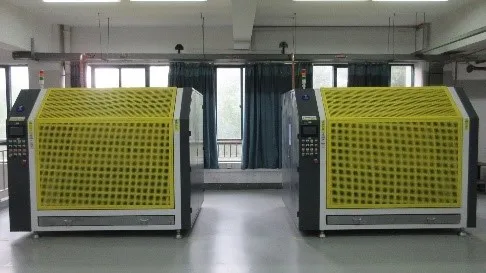
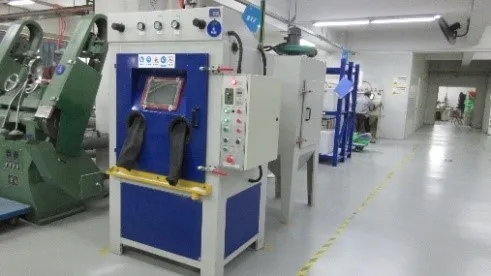
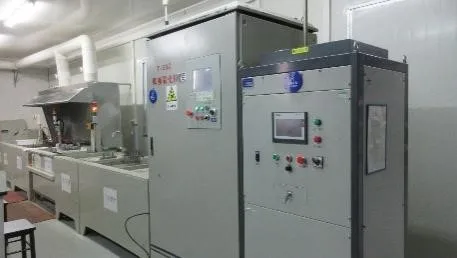
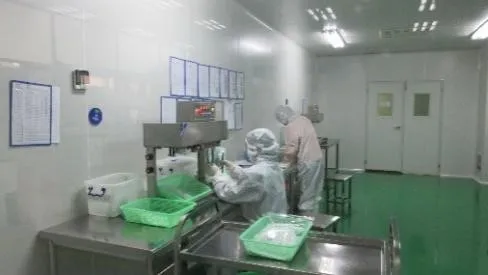
Our 29,523 square meter infrastructure is engineered around high-precision automated manufacturing cells, which minimizes manual variance in complex processes like orthopedic screw thread cutting, locking plate contours development, and surface anodization. Advanced cleanroom packing suites matching ISO class specifications ensure that particulate contaminants are completely mitigated before gamma or ethylene oxide sterilization.
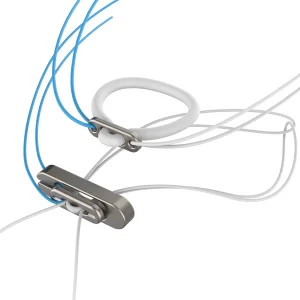
Soft tissue fixation, particularly arthroscopic shoulder rotator cuff repair and ACL/PCL reconstruction, depends heavily on the pull-out strength and structural stability of suture anchors and adjustable loops. The transition from metallic anchors to ultra-high-molecular-weight polyethylene (UHMWPE) all-suture anchors represents a major technological leap. These systems utilize unique self-expanding properties within the cancellous bone to ensure high fixation strength while avoiding bone loss.
By refining loop adjustment dynamics and anchor placement configurations, our sports medicine portfolio ensures precise anatomic restoration. This precision reduces the risk of postoperative joint laxity, enabling patients to recover faster and regain range of motion safely.
Audited data establishing operational capability, quality validation mechanisms, and structural business metrics.
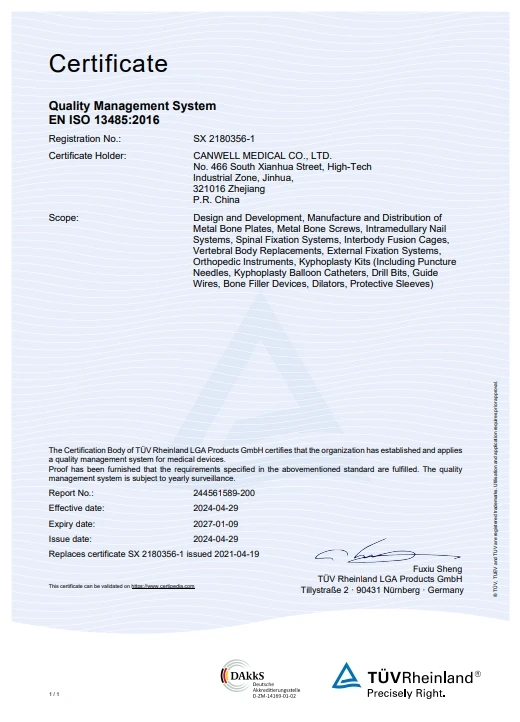
 ISO13485
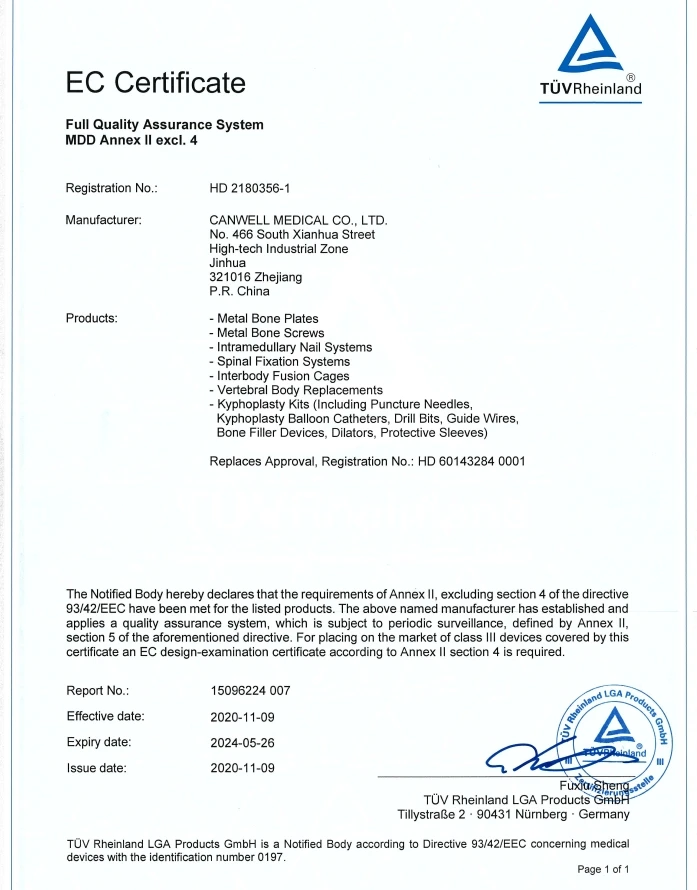
 93/42/EEC
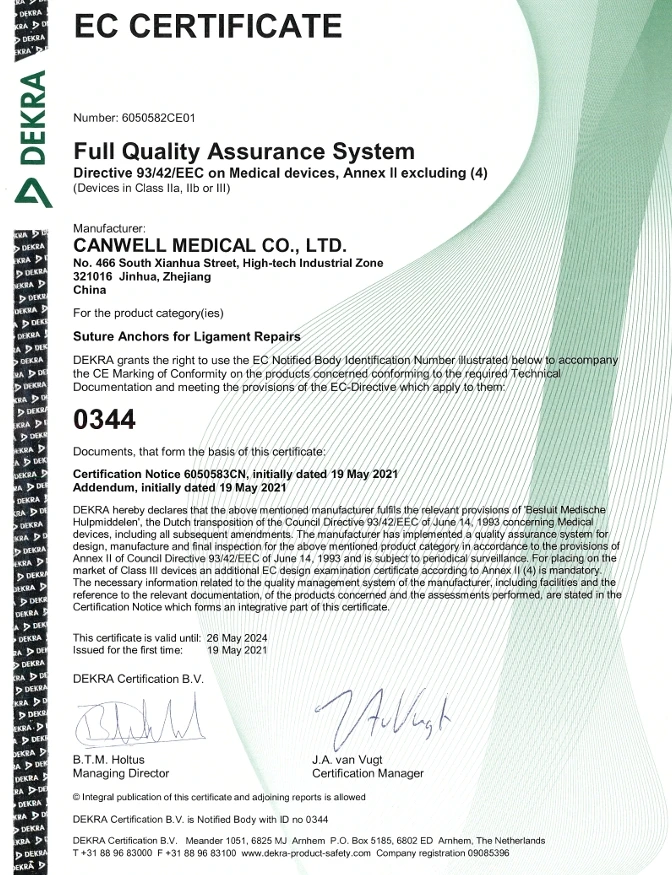 93/42/EEC
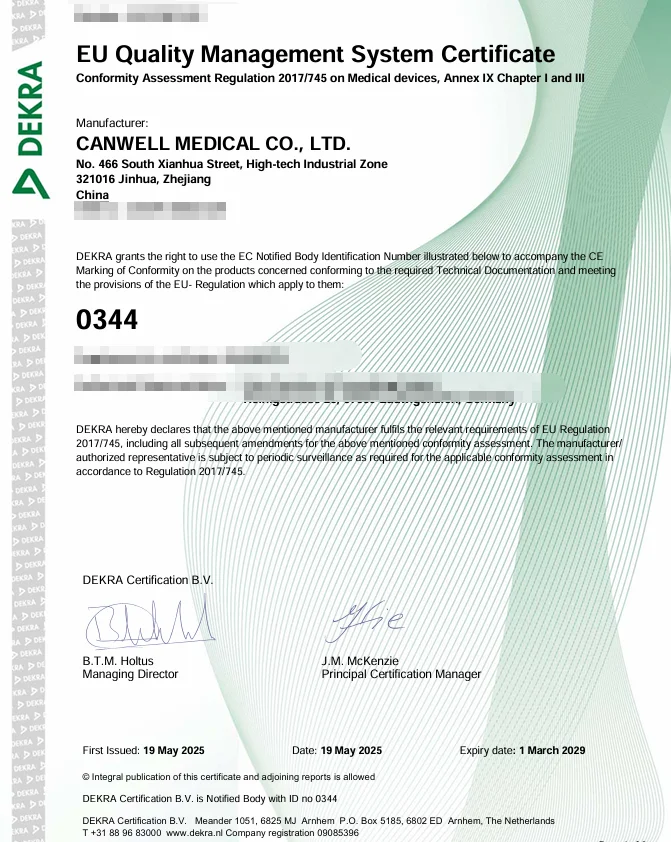
 MDR
MDR
Aligning manufacturing precision with regulatory pathways to secure seamless deployment across healthcare markets.
Navigating the transition from MDD to EU MDR (Regulation EU 2017/745) is a core focus of our regulatory affairs division. Our technical files undergo extensive scrutiny to ensure continuous verification of post-market clinical follow-up (PMCF) registries. We provide full support for local import authorizations, including ANVISA registrations in South America, TFDA submissions in Southeast Asia, and FDA 510(k) applications in North America.
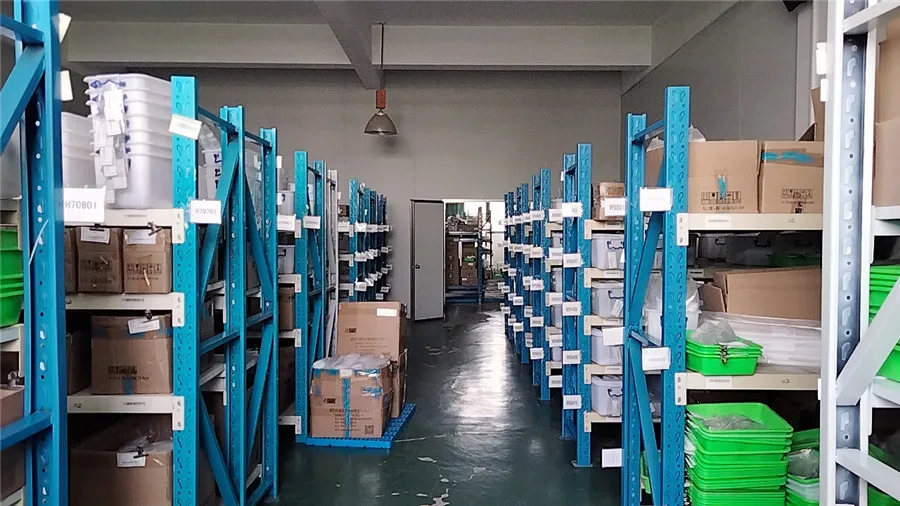
Operating in the Yangtze River Delta medical device cluster allows us to maintain direct relationships with chemical suppliers, precision tooling manufacturers, and logistics partners. This close integration reduces lead times for complex titanium modifications, custom plate production, and sterile barrier packaging. By optimizing this supply chain, we offer cost-efficient manufacturing without compromising on quality standards.
For global OEMs and brand business partners, we offer a comprehensive design-to-build pipeline. This service encompasses finite element analysis (FEA) to simulate physiological loading cycles, rapid tooling, and custom surface texturing. We support various levels of branding alignment, from private labeling with laser-etched UDI codes to completely custom instrument layouts, ensuring seamless integration into our clients' portfolios.
Bridging engineering design and real-world clinical deployment for optimal surgical outcomes.
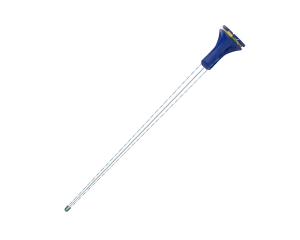
1. Arthroscopic Rotator Cuff Repair: Our all-suture and titanium suture anchors are engineered with optimized thread designs that provide high holding power in cancellous bone. The companion suture passers enable precise stitch placement through thick tendinous margins under limited visual fields.
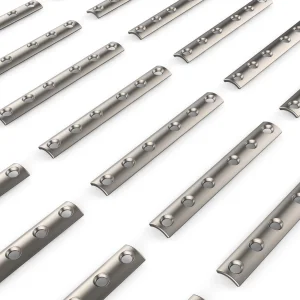
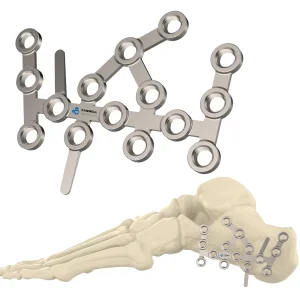
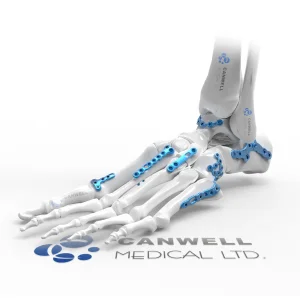
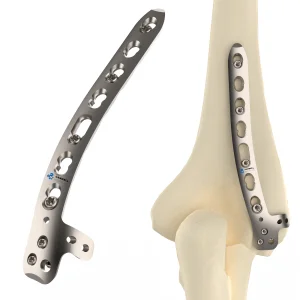
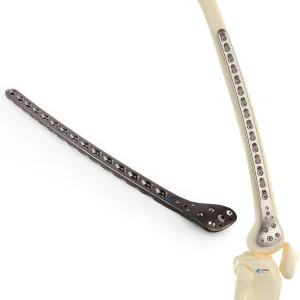
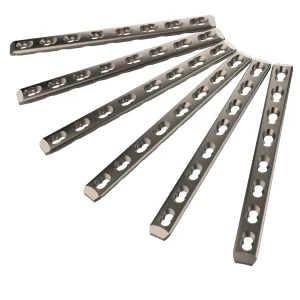
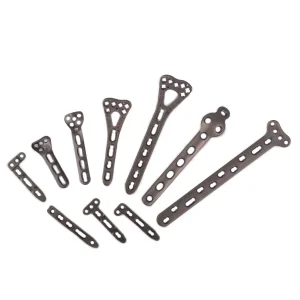
2. Complex Tibial & Femoral Trauma: Anatomically pre-contoured locking plates provide dynamic compression and stable fixation, allowing early mobilization for trauma patients. These plates are designed to minimize irritation to surrounding soft tissue.
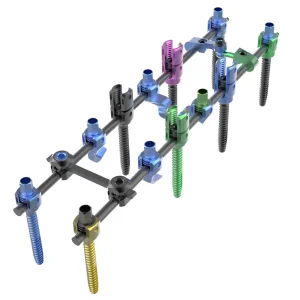
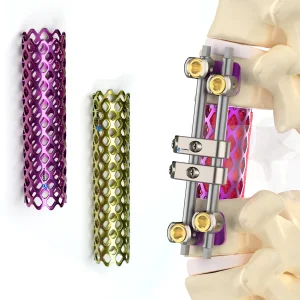
3. Minimally Invasive Spine Stabilization: Our polyaxial pedicle screws and rods are engineered for low-profile spine fixation, protecting muscle attachment points and reducing patient recovery time.
1. Transition to Bio-composite Materials: Modern sports medicine is shifting from traditional metal implants to bioabsorbable materials (such as PLDLA combined with osteoconductive beta-tricalcium phosphate). This approach allows the implant to gradually degrade as natural bone regenerates, minimizing the need for secondary removal surgeries.
2. Patient-Specific Customization (3D Printing): Leveraging advanced DICOM imaging analysis, manufacturers are moving towards custom-engineered implants. These customized plates and guides match patient anatomy, helping reduce intraoperative adjustment times.
3. Digital Ecosystem Integration: Integrating surgical instruments with robotic navigation systems provides real-time feedback on suture tension and screw placement accuracy, enhancing consistency across procedures.
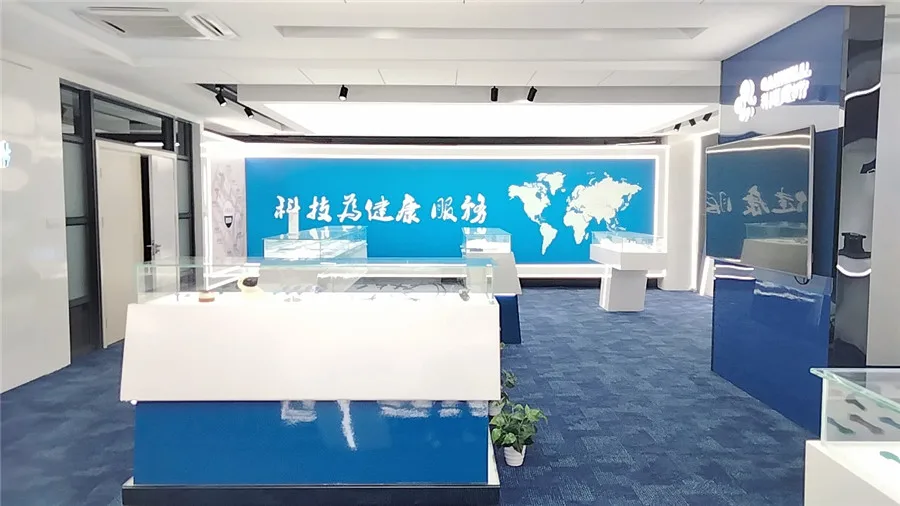
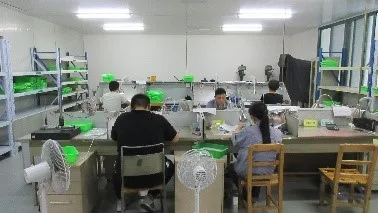
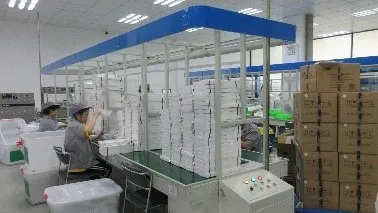
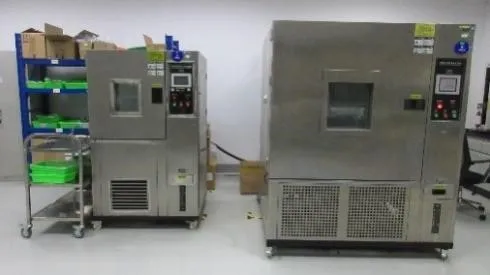
Visual evidence of our manufacturing quality, sterile cleanroom environments, and automated production tooling.




Critical engineering and regulatory answers to assist procurement directors and clinical distributors.
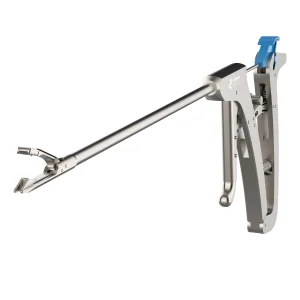
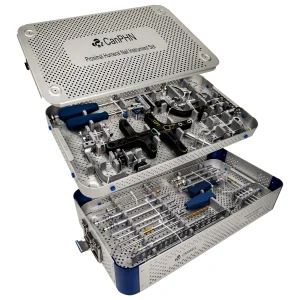
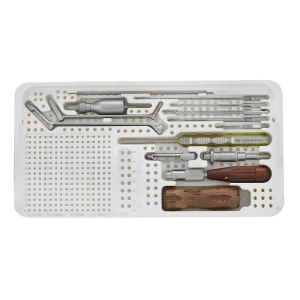
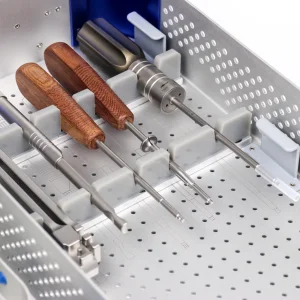
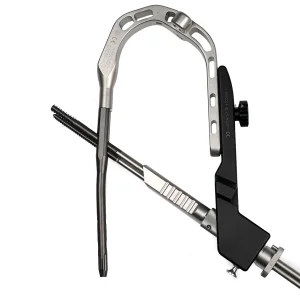
Explore our specialized surgical instrumentation and fracture fixation solutions engineered for clinical precision.
 Harney-Well