What is a Screw Mechanism and How Does It Work?

Time:2026-09-03 Author:Madeline
0%

In the engineering world, the screw mechanism serves as a crucial component in various machines and applications. According to Dr. Anna L. Carter, a leading expert in mechanical engineering, “The screw mechanism translates rotational motion into linear motion efficiently.” This statement highlights the importance of understanding how screw mechanisms operate.

A screw mechanism consists of a helical thread that enables movement and conversion of energy. This design is not new; it’s been used for centuries in devices like vices and jacks. The simplicity of the mechanism belies its impact on modern machinery, emphasizing its reliability and versatility.

However, mastering the intricacies of screw mechanisms can be challenging. Engineers must consider factors like friction and material durability. Not every design is perfect; some may require frequent adjustments. These complexities remind us that even the most reliable mechanisms may not always work flawlessly. Thus, an in-depth understanding of the screw mechanism is vital for anyone involved in engineering or design.
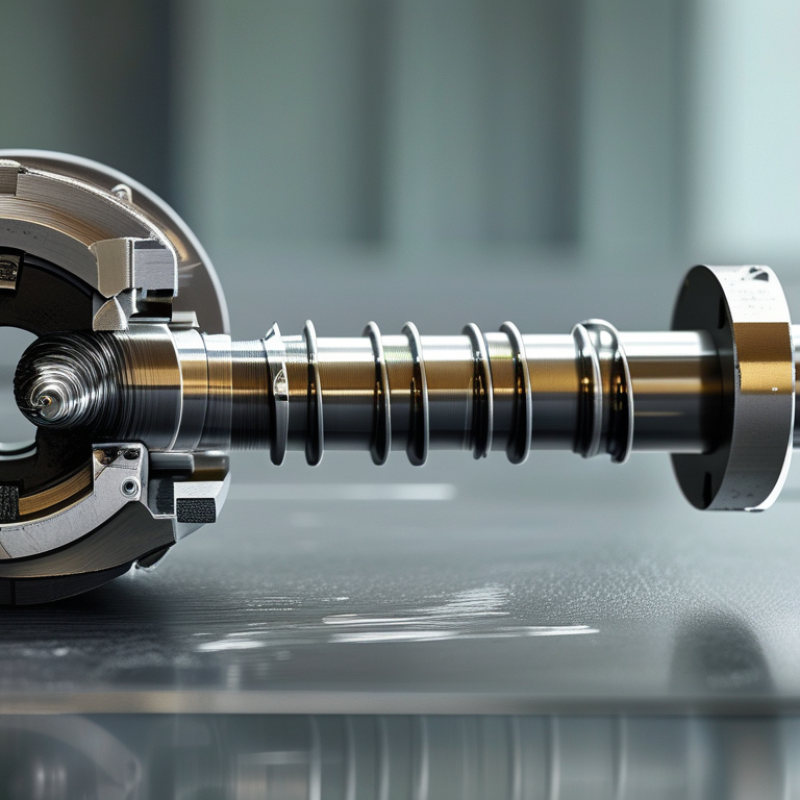
What is a Screw Mechanism and How Does It Work?

What is a Screw Mechanism?

A screw mechanism is a vital component in various machinery. Essentially, it converts rotational motion into linear motion through the principles of angular displacement. This transformation is achieved via the helical ridge known as a screw thread. It's a simple yet powerful tool used extensively in automation and manufacturing sectors.

In 2021, a report by the International Association of Precision Engineers found that screw mechanisms accounted for over 25% of linear actuation systems in industrial applications. This figure highlights their significance in ensuring efficient operations. For instance, screws are critical in applications ranging from clamping devices to conveyor systems. The ability to exert a significant amount of force makes them central to machine design.

However, not all screw mechanisms function flawlessly. Issues such as wear and tear can lead to slippage or jamming. A study published in the Journal of Mechanical Engineering found that nearly 15% of screw mechanisms experience performance degradation due to improper alignment. This challenges engineers to develop better design protocols. Continuous improvement is essential to enhance the reliability and efficiency of these mechanisms, ensuring they meet high industry standards.

History and Evolution of Screw Mechanisms

The history of screw mechanisms dates back to ancient times. The earliest screws were simple devices made from wood. Archimedes is often credited with improving the design around 250 BC. His Archimedean screw was used for raising water. This innovation showcased the principle of turning motion to achieve linear movement.

As time progressed, the screw mechanism evolved significantly. The introduction of metalworking in the Middle Ages allowed for stronger and more precise screws. By the 16th century, screws were common in various tools and machinery. During the Industrial Revolution, their role expanded further. They became crucial in assembly lines and mechanical devices. The functionality of screws advanced as new manufacturing techniques emerged.

Despite these advancements, challenges remain. Modern screws have to deal with wear and tear. Factors like material fatigue can impact performance. There is also a constant need for better designs to improve efficiency. Engineers continue to explore enhancements in screw technology, demonstrating the ongoing evolution of this fundamental mechanism.

Basic Components of a Screw Mechanism

A screw mechanism is a fascinating device that converts rotational motion into linear motion. At its core, it consists of a few basic components. The screw itself is a helical rod, which allows it to engage with a corresponding nut. This interaction creates a force that can lift heavy loads or apply significant torque.

The nut is an equally important component. It features internal threads that match the outer threads of the screw. When the screw turns, the nut moves along its length. This simple yet effective design forms the foundation of many machines. It facilitates hoisting devices, vises, and many types of clamps.

Another critical aspect is the applied force. Different screws require different forces to operate effectively. Some may require minimal force, while others need considerable torque. The effectiveness of the mechanism relies on proper alignment and lubrication too. A slight misalignment can lead to inefficient operation. Ensuring everything lines up as intended is essential for optimal performance.

How a Screw Mechanism Operates: Principles of Functionality

A screw mechanism is an essential mechanical component used in various applications. It converts rotational motion into linear motion through a simple yet effective mechanism. At its core, the screw consists of a cylindrical shaft with a helical groove, known as the thread. As the screw rotates, this threaded design enables movement along its axis while also providing significant mechanical advantage.

To understand how a screw mechanism operates, visualize turning a screw into wood. When you rotate it, the helical thread pulls the screw body inward. This action creates both a strong grip and a gradual force application. The pitch of the screw determines how far it advances with each rotation. A finer pitch requires more turns but offers greater control, while a coarser pitch moves the screw more quickly but can be less precise.

While screws are efficient, they do have limitations. Over-tightening can strip the materials, leading to component failure. A user must also consider friction, which can slow down the operation. While screws are reliable, their performance can vary based on material, alignment, and lubrication. Recognizing these factors can significantly impact their functionality and lifespan.

Screw Mechanism Load Capacity by Type

This bar chart illustrates the load capacities of various types of screw mechanisms. Each type of screw has its own characteristics, which directly influence its performance and application in mechanical systems.

Applications of Screw Mechanisms in Modern Engineering

Screw mechanisms play a vital role in modern engineering, offering a range of applications that enhance functionality. Elevators, for example, use screw mechanisms to lift and lower loads smoothly. The precision of these systems is essential for safety and efficiency in high-rise buildings. In robotics, screws enable controlled movements, allowing for intricate tasks without excessive power.

Another significant application is in manufacturing equipment, where screws facilitate assembly processes. Automated machines use threaded components to achieve tight connections. These mechanisms reduce assembly time and improve product reliability. However, over-reliance on screws can lead to challenges. In cases where screws become loose, they may compromise the integrity of the entire assembly.

Furthermore, screw mechanisms are extensively used in medical devices. Surgical tools often incorporate screws for precise adjustments. This ensures accurate performance in critical situations, such as surgeries. Yet, the design of these mechanisms requires constant evaluation. Engineers must consider materials, load limits, and potential wear over time to maintain effectiveness.

FAQS

: What is a screw mechanism?

: A screw mechanism converts rotational motion into linear motion using a helical rod and a nut.

What are the key components of a screw mechanism?

The main components are the screw and the nut, which engage through matching threads.

How does the nut function in a screw mechanism?

The nut has internal threads that allow it to move along the screw when it turns.

What influences the effectiveness of a screw mechanism?

Factors such as applied force, proper alignment, and lubrication greatly influence effectiveness.

Where are screw mechanisms commonly used?

These mechanisms are used in elevators, robotics, manufacturing equipment, and medical devices.

Why is alignment important in a screw mechanism?

Misalignment can cause inefficient operation, impacting performance considerably.

What challenges can occur with screw mechanisms?

Loose screws can compromise assembly integrity, leading to malfunction or failure.

How are screws used in medical devices?

Surgical tools use screws for precise adjustments during critical procedures, requiring careful design.

What should engineers consider when designing screw mechanisms?

They must evaluate materials, load limits, and potential wear for long-term effectiveness.

Can the reliance on screws lead to issues?

Yes, over-reliance may result in integrity issues if screws become loose or damaged.

Conclusion

A Screw Mechanism is a device that converts rotational motion into linear motion through the use of a threaded rod or screw. With origins tracing back to ancient times, screw mechanisms have evolved significantly, leading to advancements in design and functionality. They consist of basic components such as the screw, nut, and sometimes additional elements like bearings, all of which work together to facilitate movement and force transmission.

The operation of a screw mechanism is based on the principles of friction and mechanical advantage, allowing it to generate significant force while requiring minimal input effort. Today, screw mechanisms are widely utilized in various applications within modern engineering, including lifting devices, clamping systems, and machinery, showcasing their versatility and enduring relevance in the field of mechanics.

Madeline

Madeline

Madeline is a dedicated marketing professional with a wealth of expertise in our company's core offerings. With a keen understanding of the industry, she brings a unique perspective to her role, consistently delivering high-quality content that highlights the superior aspects of our products. As......