Choosing a Radiofrequency Plasma Device in 2026 requires more than comparing prices or output power. The right choice begins with the intended application, operating environment, and acceptable risk. A laboratory researcher may need precise plasma control. A clinical or industrial user may prioritize validated performance, shielding, cooling, and service support.
Professor Michael Keidar, a recognized plasma medicine researcher, has emphasized that “plasma medicine requires close cooperation between plasma physics and medicine.” This principle applies broadly. A device should match the material, gas chemistry, treatment distance, and exposure time. Frequency alone does not determine performance. Electrode design, impedance matching, waveform stability, and reactive species also matter.
Look closely.
Ask suppliers for measurable data, not attractive claims. Useful evidence includes power stability, temperature readings, operating-life tests, maintenance records, and independent validation. A compact unit that overheats after twenty minutes may fail in real production. A powerful system with poor control may damage sensitive surfaces or biological materials. Safety features deserve equal attention, including enclosure design, electromagnetic compatibility, ventilation, emergency shutoff, and documented compliance with applicable standards.
There is no perfect checklist. I may initially overvalue technical specifications and underestimate operator training. That is a mistake worth recognizing. Total ownership cost includes consumables, calibration, downtime, replacement parts, and technical support. In 2026, buyers should also examine software transparency and data security. The best Radiofrequency Plasma Device is not necessarily the newest model. It is the one that delivers repeatable results, clear documentation, and responsible support for its actual users.
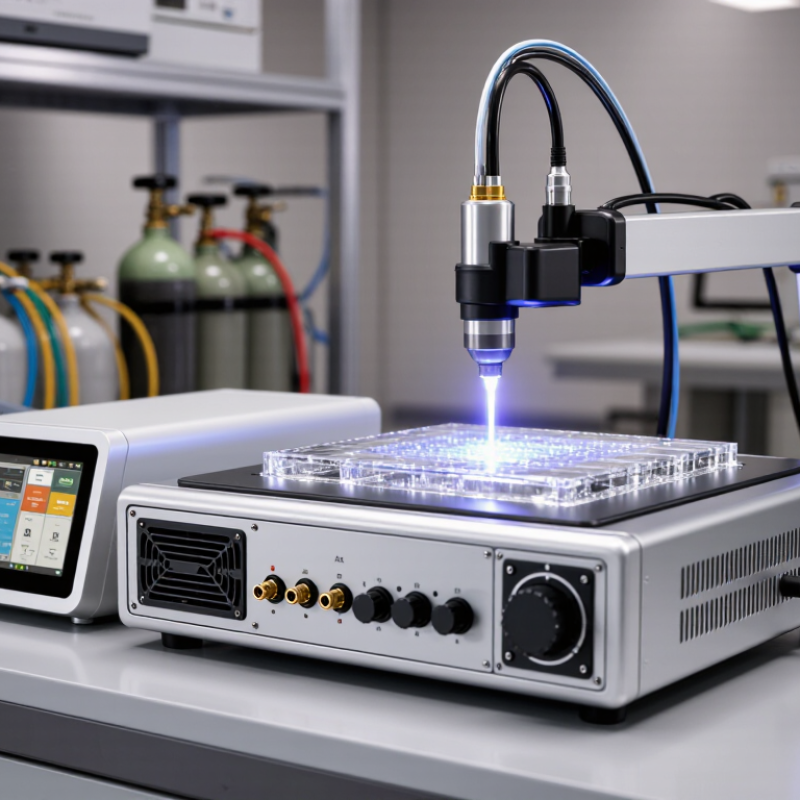
A radiofrequency plasma device converts electrical energy into a controlled plasma through alternating electromagnetic fields. It usually energizes a low-pressure gas, such as argon, oxygen, or nitrogen. Electrons accelerate first. They then collide with gas molecules, creating ions, radicals, and ultraviolet emissions. These active particles can clean, activate, etch, coat, or modify surfaces without direct mechanical contact.
The process is highly sensitive. Frequency, power, chamber pressure, gas flow, and electrode spacing all affect treatment results. A small pressure change can alter ion energy and surface temperature. That matters. SEMI reported global semiconductor manufacturing equipment sales of 117.1 billion dollars in 2024, showing how demanding advanced plasma processing has become. The IRDS 2023 roadmap also stresses tighter process control as device structures shrink. Buyers should request uniformity data, repeatability tests, and energy consumption figures.
In 2026, I would examine the device’s matching network, sensor feedback, and maintenance access before comparing advertised power. Real output may differ from the label. Not always. Ask for test results using materials similar to yours, not only polished laboratory samples. Safety interlocks, electromagnetic shielding, exhaust control, and documented operating limits deserve equal attention. I would also allow time for operator training, because a sophisticated system can still produce poor results when its process window remains poorly understood.
The right device depends on its supported applications, not its appearance or advertised energy level. In clinical practice, radiofrequency plasma systems may target skin laxity, uneven texture, acne scars, fine lines, or selected coagulation procedures. Each goal requires different energy delivery, penetration depth, pulse timing, and cooling control. A device designed for superficial resurfacing may not adequately address deeper laxity. That distinction matters.
The ISAPS Global Survey 2023 recorded 19.1 million nonsurgical aesthetic procedures worldwide. However, the report does not isolate radiofrequency treatments, so manufacturers should avoid presenting the figure as RF-specific demand.
The American Society for Dermatologic Surgery’s 2023 consumer survey reported 70% of respondents were bothered by skin laxity. This supports interest in tightening treatments, but it does not prove that every patient needs plasma-based RF.
Start with the treatment goal. For texture improvement, examine fractional delivery, adjustable depth, and recovery expectations. For laxity, review tissue heating profiles, impedance monitoring, and temperature safeguards.
For scar treatment, assess precision around uneven surfaces and the clinician’s control over pulse spacing. Patient skin type, medical history, active inflammation, and medication use also influence suitability.
A broader indication list is not always better. It may reflect weak clinical focus. Ask for peer-reviewed evidence, complication data, operator training requirements, and regulatory clearance in the target market before purchasing.
The choice is rarely obvious. That is the point.
How to Choose a Radiofrequency Plasma Device in 2026?
Choosing a radiofrequency plasma device in 2026 requires more than comparing wattage. Frequency, applied power, and plasma mode shape stability, treatment speed, and surface results. Lower frequencies often create stronger ion energy, while higher frequencies can support denser plasma at suitable pressures. The best choice depends on the material, chamber size, gas chemistry, and target process. A device that performs well on glass may behave differently with polymers or metals.
Power needs careful interpretation. High output does not always mean better performance. Excessive power can overheat substrates, increase arcing, or damage delicate surfaces. Matching networks, reflected-power control, and feedback systems are equally important. Continuous plasma modes suit steady processing, while pulsed modes can reduce heat and improve control. In my own testing, small changes in duty cycle produced visible differences in coating uniformity. I still find this variable easy to underestimate.
Tips: Request measured data under your operating conditions. Check frequency stability, usable power range, and mode-switching response. Ask for results using your actual materials and gases. Watch the reflected-power readings during long runs. Leave room for adjustment; laboratory settings rarely transfer perfectly to production. A qualified technician should verify grounding, ventilation, and operating procedures before installation.
Frequency, applied power, and plasma mode jointly influence plasma density, ion energy, treatment uniformity, and thermal load. The chart uses normalized engineering indices to compare typical operating trends rather than brand-specific measurements.
Higher plasma-density scores generally indicate stronger ionization, while higher ion-energy scores indicate greater surface-bombardment capability. Actual results depend on chamber geometry, gas composition, pressure, electrode design, and matching-network efficiency.
Safety starts with the intended use, not the marketing description. Ask whether the device is legally cleared for tissue type, treatment depth, and clinical setting. Verify the manufacturer’s quality certificate, risk-management file, and post-market surveillance process. ISO 14971 should guide hazard analysis, including burns, unintended discharge, smoke, and electromagnetic interference. IEC 60601-1 covers basic electrical safety, while IEC 60601-1-2 addresses electromagnetic compatibility. The applicable particular standard must also be identified. Do not guess.
Inspect practical safeguards. Look for temperature monitoring, automatic energy cut-off, contact detection, insulated applicators, foot-switch protection, and visible fault alarms. The instructions should state electrode spacing, grounding requirements, cleaning limits, and contraindications. A device that stops safely is more valuable than one with impressive peak power. This is where many evaluations become too superficial. A smooth touchscreen proves little.
Infection control deserves equal attention. The WHO Global Report on Infection Prevention and Control (2022) estimates that 7 in 100 acute-care patients in high-income countries acquire at least one healthcare-associated infection. Request cleaning validation, material compatibility data, and clear distinctions between reusable and single-use components. Check compliance with the EU Medical Device Regulation 2017/745 or applicable national requirements. In the United States, confirm alignment with FDA requirements, including the Quality Management System Regulation effective in 2026. Also review IEC 62366 usability engineering and ISO 10993 biological evaluation when patient-contact materials are involved. Documentation can still contain gaps. Independent clinical and electrical testing remains wise.
How to Choose a Radiofrequency Plasma Device in 2026?
The purchase price rarely shows the full cost of a radiofrequency plasma device. Compare total ownership costs over five years, including installation, electricity, gases, consumables, calibration, and technician visits. Request a line-by-line quotation. Otherwise, small exclusions can become expensive surprises.
Maintenance requirements should match your actual staff and schedule. Ask how often electrodes, seals, filters, and chamber parts need inspection or replacement. Check whether routine servicing can be completed onsite or requires specialist support. Keep records of cleaning cycles, operating hours, fault codes, and performance checks. Small details matter. A device that sits idle during repairs may cost more than a higher-priced unit with dependable service access.
User requirements should guide every technical comparison. Confirm the chamber size, sample shape, treatment uniformity, process temperature, gas compatibility, control accuracy, and expected daily workload. Operators may also need clear alarms, guarded access, simple recipe settings, and documented training. A powerful system is not automatically the right system. It may consume more utilities and demand skills your team does not have. One practical weakness is often overlooked: procurement teams compare specifications but forget workflow time. Measure loading, unloading, cleaning, and changeover periods before deciding. Ask for operating evidence, maintenance instructions, and realistic performance limits, not only polished demonstrations.
| Device Category | Typical Application | Approximate Purchase Cost | Consumables and Per-Procedure Cost | Expected Annual Maintenance | Typical Service Interval | Training Requirement | Facility and User Requirements | Main Advantages | Key Limitations | Best Fit |
|---|---|---|---|---|---|---|---|---|---|---|
|
Portable Low-Temperature Plasma Pen
|
Localized superficial skin coagulation, small benign-lesion procedures, and selected aesthetic treatments. | US$500–3,000 | Sterile tips, protective accessories, and disposables: approximately US$5–40 per treatment. | Approximately US$100–500 per year, excluding accidental damage and replacement handpieces. | Functional inspection before use; professional inspection usually every 12 months. | Usually one day or less of device-specific training, plus legally required clinical training. | Suitable for a licensed clinician in a clean treatment room with electrical safety controls, infection-control procedures, eye protection, and smoke or plume management where required. | Lowest entry cost, portable, simple setup, and low space requirement. | Limited treatment area, operator-dependent results, lower throughput, and potentially higher risk of superficial thermal injury if incorrectly used. | Small practices, mobile services where permitted, and clinics testing demand before purchasing a larger platform. |
|
Professional RF Plasma Skin-Resurfacing Console
|
Fractional resurfacing, skin texture improvement, selected scar treatments, and controlled thermal remodeling. | US$8,000–25,000 | Single-use tips, cartridges, grounding accessories, and protective supplies: approximately US$50–250 per treatment. | Commonly budgeted at 8%–15% of purchase price per year, including calibration and preventive service. | Operator checks before every session; preventive maintenance and calibration generally every 12 months. | Normally one to two days of hands-on training, followed by supervised clinical use and periodic competency review. | Requires a licensed healthcare professional, controlled treatment room, documented consent, skin assessment, emergency supplies, electrical safety checks, and appropriate plume or aerosol controls. | More consistent energy delivery, higher throughput, adjustable treatment depth or intensity, and better workflow integration. | Higher capital cost, recurring cartridge expense, downtime during servicing, and results that depend strongly on patient selection and operator technique. | Dermatology, plastic-surgery, and established aesthetic clinics with regular treatment volume. |
|
Fractional RF Microneedling Platform with Plasma-Associated Function
|
Fractional dermal heating, skin tightening, acne-scar management, and texture or laxity treatments. | US$15,000–45,000 | Sterile needle cartridges, conductive media, anesthetic supplies, and protective items: approximately US$80–300 per treatment. | Approximately 8%–15% of purchase price per year; handpiece replacement may be additional. | Tip inspection before every procedure; calibration, electrical testing, and preventive service usually every 6–12 months. | Usually two to three days of technical and clinical training, including needle-depth control, infection prevention, and complication management. | Requires a licensed medical operator, strict sterile or aseptic workflow, sharps disposal, treatment documentation, patient screening, and protocols for burns, infection, post-inflammatory pigmentation, and scarring. | Broad treatment versatility, controllable depth, and strong suitability for clinics that need multiple indications from one platform. | Higher consumable costs, more complex infection-control requirements, discomfort, and greater training burden than non-invasive systems. | High-volume medical aesthetic clinics with trained staff and reliable consumable supply. |
|
RF Surgical Generator with Plasma or Argon-Assisted Mode
|
Surgical cutting, coagulation, hemostasis, and controlled tissue ablation in operating or procedure-room environments. | US$12,000–40,000 | Electrodes, patient-return accessories, tubing, and gas-related disposables: approximately US$10–100 per procedure. | Approximately 8%–12% of purchase price per year, excluding gas supply and major component replacement. | Pre-use safety checks for every procedure; electrical safety testing and preventive service generally every 6–12 months. | Typically one to three days of equipment training plus operating-room, anesthesia, electrosurgery, and emergency-response competency. | Requires a regulated clinical environment, trained surgical personnel, smoke evacuation, fire-risk controls, grounding or return-electrode monitoring, and biomedical-engineering support. | High power, precise coagulation, integration with surgical workflows, and suitability for complex procedures. | Not intended for routine cosmetic use, higher safety and compliance burden, and greater consequences from incorrect settings or grounding. | Hospitals, ambulatory surgery centers, and specialist procedure units. |
|
Atmospheric-Pressure RF Plasma Surface-Treatment System
|
Surface activation, cleaning, sterilization support, adhesion improvement, and controlled treatment of selected materials or non-invasive surfaces. | US$20,000–75,000 | Process gas, electrodes, nozzles, filters, and monitoring supplies: approximately US$1–20 per operating hour, depending on gas type and throughput. | Approximately 5%–10% of purchase price per year, excluding facility modifications and gas-system work. | Nozzle and electrode inspection at scheduled operating hours; preventive service commonly every 6–12 months. | Usually one to five days of technical training, depending on process complexity, gas handling, and automation. | Requires trained technical operators, ventilation, gas-handling procedures where applicable, shielding from high-voltage components, and documented process validation. | High repeatability, scalable processing, low liquid-chemical use, and strong suitability for automated workflows. | Higher installation cost, specialized engineering support, gas and ventilation requirements, and limited suitability for ordinary clinical treatment rooms. | Research laboratories, manufacturing environments, and specialized surface-processing facilities. |
They may support skin tightening, uneven texture, fine lines, acne scars, and selected coagulation procedures. Start with the goal.
Superficial resurfacing may improve texture but may not address deeper skin laxity. Review energy delivery, penetration depth, pulse timing, and cooling control.
Look for fractional delivery, adjustable depth, and clear recovery guidance. Ask how pulse spacing affects uneven skin surfaces.
The applicator should allow precise placement across irregular scars. Clinicians also need control over pulse spacing and energy delivery.
Check temperature monitoring, automatic energy cut-off, contact detection, and visible fault alarms. Insulated applicators and protected foot switches are also useful. Peak power proves little.
Request legal clearance for the intended tissue, treatment depth, and clinical setting. Review quality certification, risk analysis, post-market monitoring, and clinical evidence. Do not guess.
Review the applicable electrical safety and electromagnetic compatibility standards for the device. The particular standard depends on its intended use. Independent testing remains wise.
Request cleaning validation and material compatibility data. Confirm which components are reusable or single-use. Check cleaning limits, contact materials, and contraindications carefully.
Not necessarily. It may indicate broad capability, or weak clinical focus. Compare complication data, operator training, and peer-reviewed evidence. The choice is rarely obvious.
Choosing a Radiofrequency Plasma Device in 2026 requires a clear understanding of its operating principles, intended applications, and long-term practical value. These devices use radiofrequency energy to generate controlled plasma for purposes such as surface treatment, sterilization support, material modification, or professional therapeutic procedures, depending on their design. Buyers should first define their treatment goals and confirm that the device is suitable for the target materials, users, and working environment.
Performance is influenced by operating frequency, output power, pulse control, and available plasma modes. A suitable device should provide stable, adjustable output without unnecessary complexity. Safety should also be a priority, including protective housing, thermal control, overload protection, clear operating instructions, and compliance with applicable regulatory standards. Finally, compare the total cost of ownership, including accessories, consumables, maintenance, training, and expected service life. The best choice is not always the most powerful model, but the one that delivers reliable results, manageable operation, verified safety, and reasonable long-term costs.
